Find the watch that fits the runner you are becoming
The best running watch isn't the most expensive one. It's the one that fits the runner you are today and the one you're training to become.
A first-timer on a Couch-to-5K plan needs something very different from someone lining up for a 100-miler. Buy too little and you'll outgrow it in six months. Buy too much and you're paying for features you'll never touch.
So we've split this guide into four runner types, from first 5K to mountain ultras. Each section gives you a top pick, a value pick and what not to overspend on. Every watch here works with Elite You, either directly or through Strava.
The picks are independent. We don't earn anything from these links, and we've pointed to the reviewers we trust so you can dig deeper. Prices are US recommended retail at the time of writing and will vary by region and retailer.
What actually matters in a running watch
Watch brands list hundreds of features. Five of them decide whether a watch suits you.
- GPS accuracy: All the watches here are accurate enough for training. Dual-band (or multi-band) GPS listens to two satellite frequencies instead of one, which helps under tree cover, in tall city streets and in steep valleys. It's a nice-to-have on open roads. On technical trails it matters more.
- Battery life in GPS hours: Ignore the "days" figure on the box, which assumes you barely train. What counts is how many hours of GPS tracking you get. A marathon needs 5 hours. A mountain 50K can take 10. A 100-miler can take more than 30.
- Barometric altimeter: This measures height from air pressure rather than GPS, so your vert is far more accurate. Elite You builds trail plans around vert and technicality, so if you run hills, you want one.
- Maps and navigation: Breadcrumb navigation (a line to follow) is fine for most road running. Full offline maps with trail names and turn-by-turn directions become important once you're racing or exploring unmarked routes.
- Heart rate sensor: Wrist sensors have improved a lot, but they still struggle with sharp intervals and cold, bouncy descents. If your training is heart-rate led, a chest strap is a worthwhile add-on for any watch.
Quick picker
Short on time? Find your row.
| You are | Top pick | Value pick | Typical spend (USD) |
|---|---|---|---|
| New to running (Couch-to-5K, first 10K) | Garmin Forerunner 70 | Coros Pace 4 | $200 to $250 |
| Building up on the road (10K to marathon) | Garmin Forerunner 170 | Suunto Run 2 | $300 to $450 |
| Trail runner (technical terrain, up to 42K) | Garmin Forerunner 970 | Coros Apex 4 | $400 to $750 |
| Ultra and mountain runner (50K and beyond) | Garmin Fenix 9 | Suunto Vertical 2 | $600 to $1,100 |
1. New to running: Couch-to-5K and your first 10K
You're building a habit. You need a watch that tracks distance and pace reliably, shows your heart rate, and makes it easy to follow a structured plan. You don't need maps, 60 hours of battery or a titanium case.
Top pick: Garmin Forerunner 70 ($249.99). Launched in May 2026, it replaces both the Forerunner 55 and 165, and it's a big step up. You get an AMOLED touchscreen and training features Garmin used to keep for pricier watches: Training Readiness, HRV Status and VO2 Max. DC Rainmaker found its GPS "virtually identical" to Garmin's high-end models, despite being single-band. The downsides: there's no barometric altimeter, no music and no contactless payments. Garmin claims 23 hours of GPS, but the5krunner found it fell short of that in testing. That's still plenty for anything up to a half marathon.
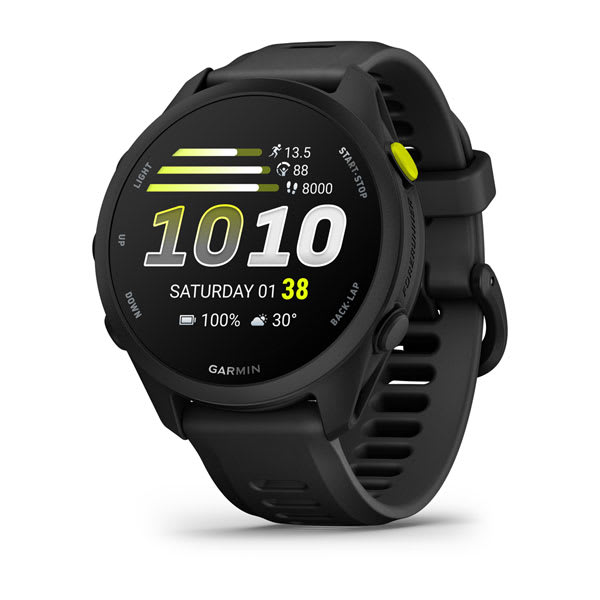
Garmin Forerunner 70 — top pick for new runners
Value pick: Coros Pace 4 ($249). At 32g it's one of the lightest watches you can buy, and battery is its strength: up to 41 hours of GPS, or around 31 hours in dual-band mode (Tom's Guide). Coros added offline maps in September 2026 as a public beta, though storage is limited to your local area. Smart features are basic. Choose it over the Forerunner 70 if you want a lighter watch, longer battery and room to grow into trails.
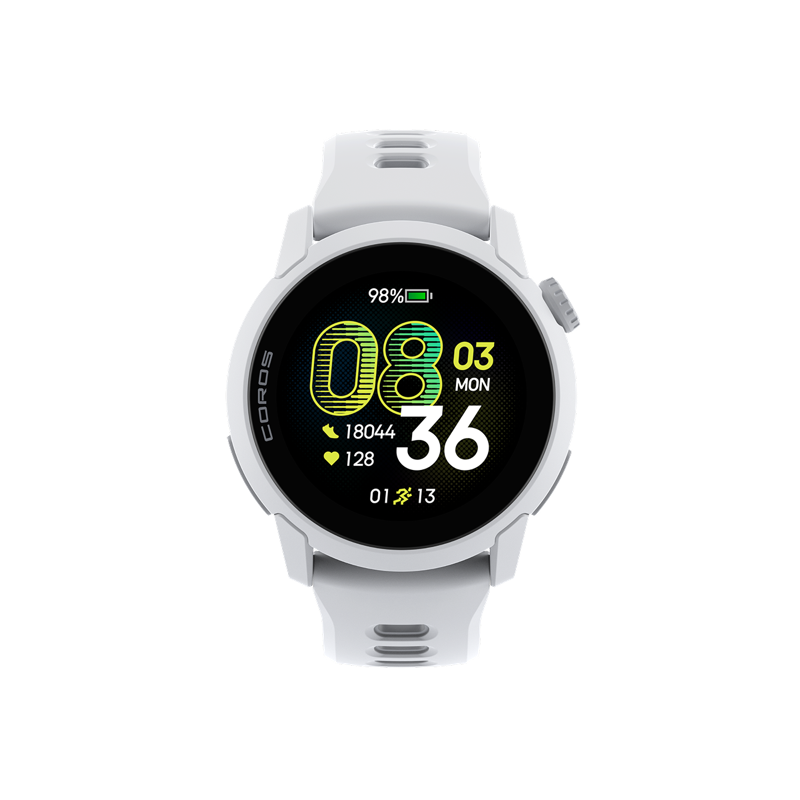
Coros Pace 4 — light, long battery, strong value
On sale: Suunto Run (currently $199, launched at $249). It's light at 36g, has dual-band GPS and gives up to 20 hours of GPS. It's now been replaced by the Run 2, and its wrist heart rate is less consistent than its rivals' (DC Rainmaker). It's only worth it at a discount.
Don't overspend on
Maps, long battery, music or premium materials. None of them will make your first 5K better.
Time to upgrade when: you're running four or more times a week, training for a half or full marathon, or starting to head onto hills and trails.
2. Building up on the road: 10K to marathon
You're running most days, following a plan and chasing times. Now training load, recovery guidance and reliable pacing matter. A marathon build also means long runs of 2 to 3 hours, so battery starts to count.
Top pick: Garmin Forerunner 170 ($299.99, or $349.99 with music). It takes everything in the Forerunner 70 and adds a barometric altimeter, compass, Garmin Pay and Training Status, which tells you whether your fitness is building or stalling. It weighs 41g and gives up to 20 hours of GPS. The Run Testers called it "a terrific running watch". You don't get multi-band GPS or full maps, only breadcrumb navigation.
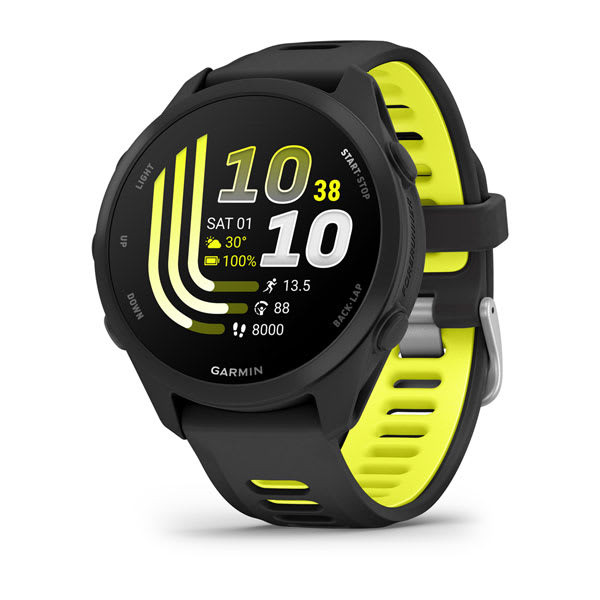
Garmin Forerunner 170 — top pick for road builders
Value pick: Suunto Run 2 ($349 with 4GB, $399 with 64GB). Launched in September 2026, it's 35g, has dual-band GPS, gives up to 24 hours of GPS and includes free offline maps with plenty of storage. The big win is heart rate: in Tom's Guide testing it matched a chest strap, and the5krunner found similar. Step counting and sleep tracking were weak, and Suunto's training analysis isn't as clear as Garmin's. There's no contactless payment or music streaming, and Tom's Guide felt the Forerunner 170 and Coros Pace 4 are better value at full price. Pick it if heart rate accuracy and maps matter most to you.
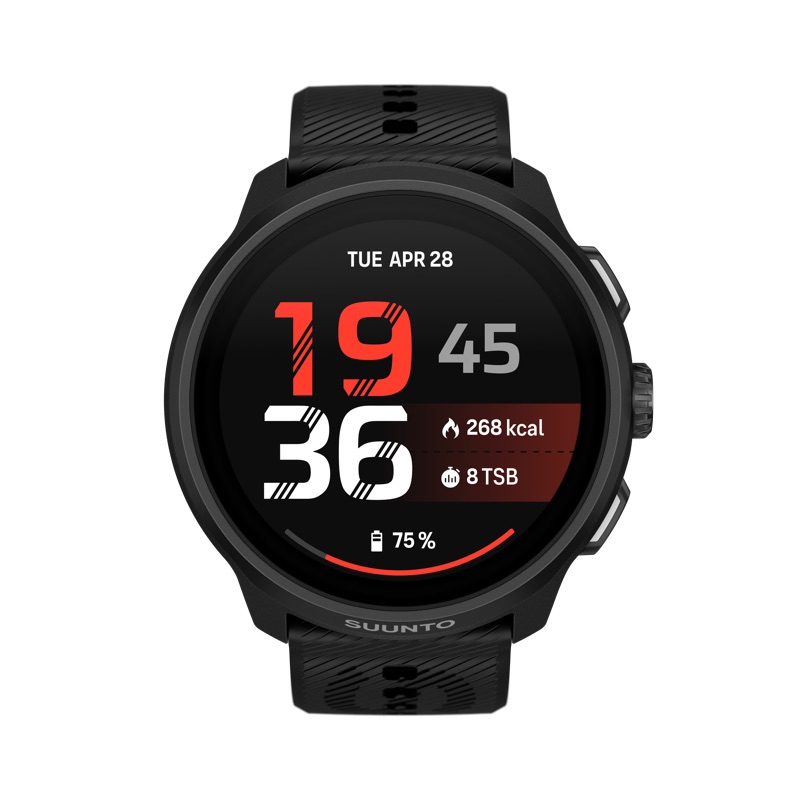
Suunto Run 2 — strong heart-rate accuracy and free maps
Newest option: Coros Pace 4 Pro ($449). Released on 22 September 2026, so treat this as an early call. There are only a handful of independent write-ups so far, and most are based on the spec sheet. On paper it's a lot of watch for the money: a titanium bezel, sapphire lens, a 3,500-nit AMOLED screen, offline maps and up to 60 hours of dual-band GPS (the5krunner). It's heavier than the Pace 4 at 43 to 51g, and a launch review notes the charging cable is sold separately. Worth a look if you'll move onto trails too. We'll update this once it's been properly tested.
Want more than the Forerunner 170? Look at last generation's Garmins. Garmin has discontinued the Forerunner 265 and 965, and they regularly go on sale while stock lasts.
- Forerunner 265 (launched at $449.99, seen around $350 on sale). Over the 170, you gain multi-band GPS, up to 24 hours of GPS, 13 days of smartwatch battery, music storage as standard and a triathlon mode. It's slightly heavier at 47g.
- Forerunner 965 (launched at $599.99, seen around $500 on sale). Everything the 265 adds, plus full offline topo maps, ClimbPro for pacing climbs, up to 31 hours of GPS and a bigger 1.4-inch screen (DC Rainmaker). It's a strong buy if you're heading towards trails.
Why not the current Forerunner 570? At $549.99 it has no maps and no ECG. Tom's Guide suggests a discounted 265 or 965 is better value, and we agree.
Don't overspend on
Full maps if you only run familiar road routes, or battery beyond about 20 hours.
Time to upgrade when: your long runs move onto trails, vert starts showing up in your plan, or you're eyeing a trail race.
3. Trail runner: technical terrain, up to 42K
On trail, pace becomes a poor guide. A kilometre with 150m of climbing and loose rock is a different effort from a flat one. You need accurate vert (a barometric altimeter), maps so you don't take the wrong fork, and enough battery for a long mountain day. Every watch in this section has all three.
Top pick: Garmin Forerunner 970 ($749.99). iRunFar rates it the best overall GPS running watch of 2026, and for trail it earns that. Trail Run Auto Climb switches to climbing data screens automatically on ascents. You get grade-adjusted pace in real time, a Hill Score that tracks your climbing fitness, full offline maps with turn-by-turn directions, and a flashlight with a red-light mode. It weighs 57g. The trade-off is battery: iRunFar's review puts it at roughly 26 hours of GPS, which covers any marathon-distance trail race but not a long ultra.
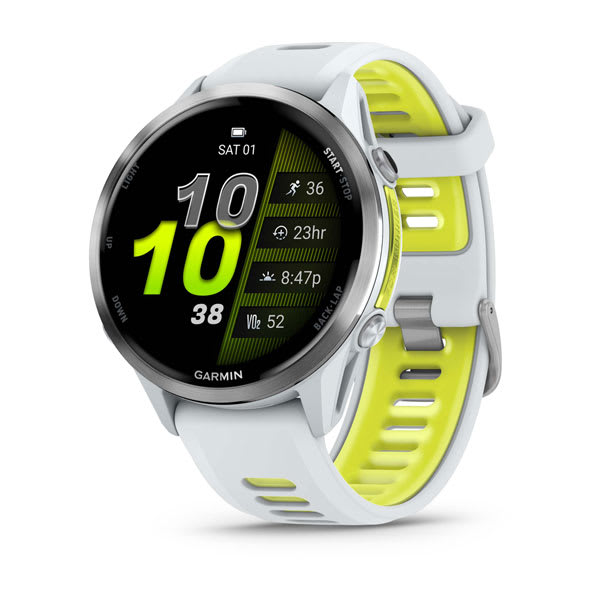
Garmin Forerunner 970 — top trail pick for 2026
Value pick: Coros Apex 4 ($429 for 42mm, $479 for 46mm). Battery is the headline here: 41 hours in dual-band mode and up to 65 hours in endurance mode on the 46mm. It has topo maps with trail names, a sapphire lens and a titanium bezel. BetterTrail rated it 4.8 out of 5. It uses a memory-in-pixel screen, which saves battery but looks duller than AMOLED, and smart features are limited. If you're edging towards ultras, this is the one that grows with you.
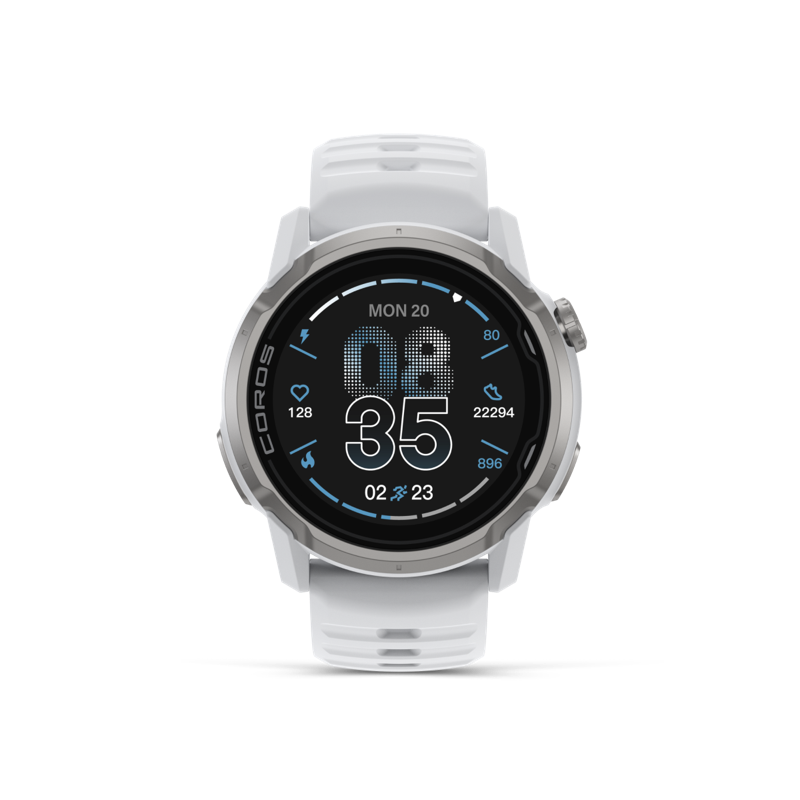
Coros Apex 4 — trail value with serious battery
Budget pick: Amazfit T-Rex 3 Pro ($399.99). A lot of watch for the money: dual-band GPS, offline maps with rerouting, a flashlight, a titanium bezel and around 38 hours of GPS. RunToTheFinish scored it 94%. Setup is less intuitive than Garmin or Coros, and the Zepp app's training analysis is less developed.
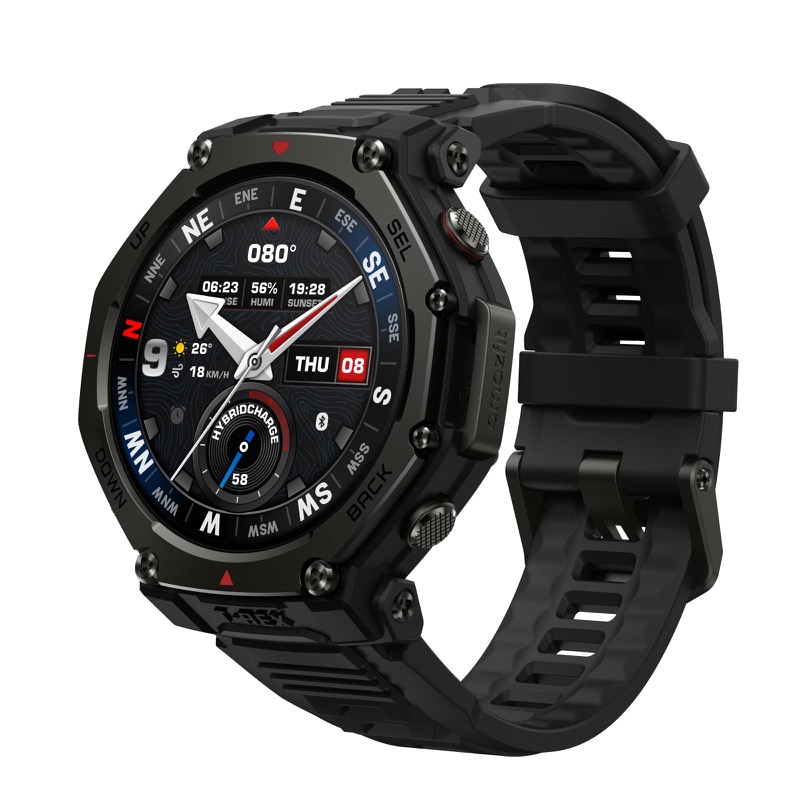
Amazfit T-Rex 3 Pro — budget trail option with maps
The Coros Pace 4 Pro from section 2 also has maps, dual-band GPS and 60 hours of battery, so it's worth considering here once more reviews are in.
Don't overspend on
100+ hours of battery if your longest race is a marathon, or satellite messaging if you run on popular trails.
Time to upgrade when: you've signed up for your first 50K, or your long days in the mountains run past 10 hours.
4. Ultra and mountain runner: 50K and beyond
Once races run past 10 hours, battery comes first. A watch that dies at hour 22 of a 100-miler is no use, however good its training metrics are. After battery, you want dependable navigation for the night sections and a screen you can read when you're exhausted.
Top pick: Garmin Fenix 9 (from $999.99). Garmin's flagship launched in August 2026. It has a 2,000-nit AMOLED screen, 64GB of storage for maps, upgraded stamina tracking with zones and a stamina curve, so you can see how much you have left, and Garmin Epic for recording multi-day events. Size matters for battery. The 47mm gives up to 30 hours of GPS, or 81 hours in max battery mode. The 51mm ($1,099.99) goes up to 145 hours, so it's the one to choose for 100K and 100-mile races (the5krunner). The Fenix 9 Pro (from $1,099.99) adds a titanium case, a 3,000-nit screen, LTE and satellite messaging with SOS (a subscription is needed), and a solar option. That's worth it if you run remote routes alone.
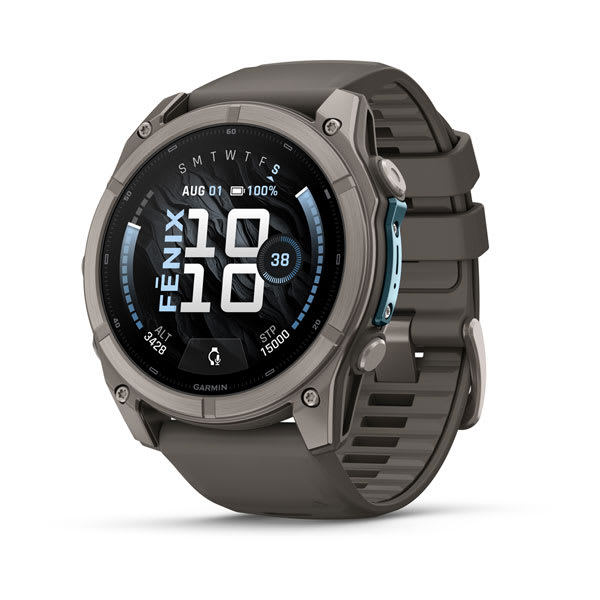
Garmin Fenix 9 — flagship pick for ultras and mountains
Value pick: Suunto Vertical 2 ($599 steel, about $699 titanium). In DC Rainmaker's testing it "easily beat" its rivals on real-world battery. You get 65 hours in dual-band mode, 110 hours in ultra mode and up to 250 hours in tour mode. It also has free global maps, an AMOLED screen and Suunto's first built-in flashlight. At 74 to 87g it's heavy, navigation takes more steps than on a Garmin, and the flashlight's software needs polish. Few watches at this price go longer.
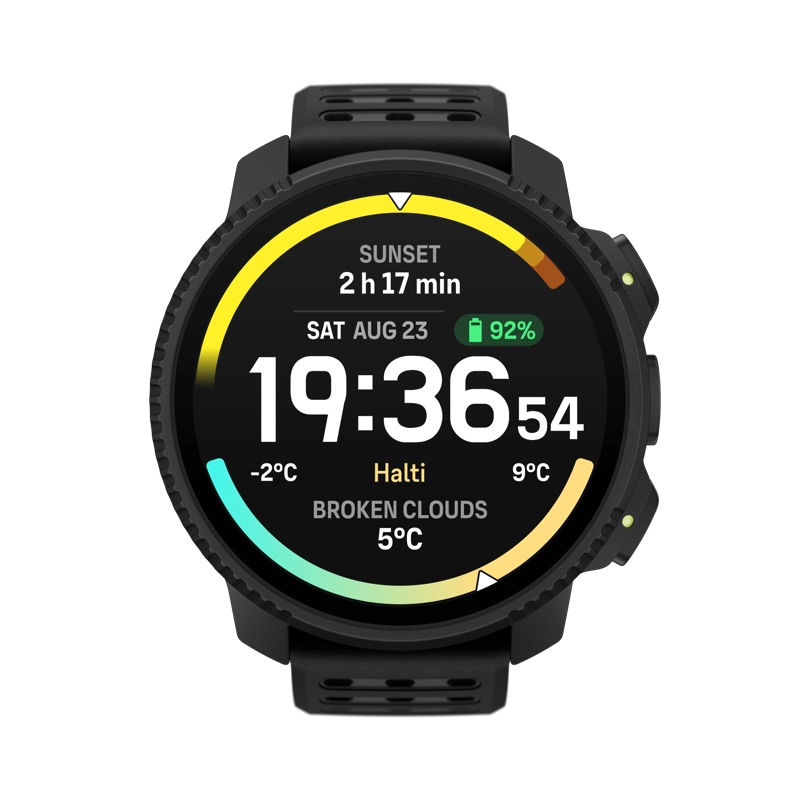
Suunto Vertical 2 — ultra battery without the flagship price
Battery specialist: Coros Vertix 2S (around $699). 118 hours of GPS, topo maps, dual-band GPS and a sapphire and titanium build. Its map "extender" mirrors your route live on your phone screen. iRunFar calls it best suited to ultras, but notes it's bulky at 87g. It launched in 2024, and a successor, the Vertix 4, has appeared in a regulatory filing but hasn't been announced. If you're not racing soon, it may be worth waiting. Otherwise the Apex 4 46mm from section 3 is a lighter alternative.
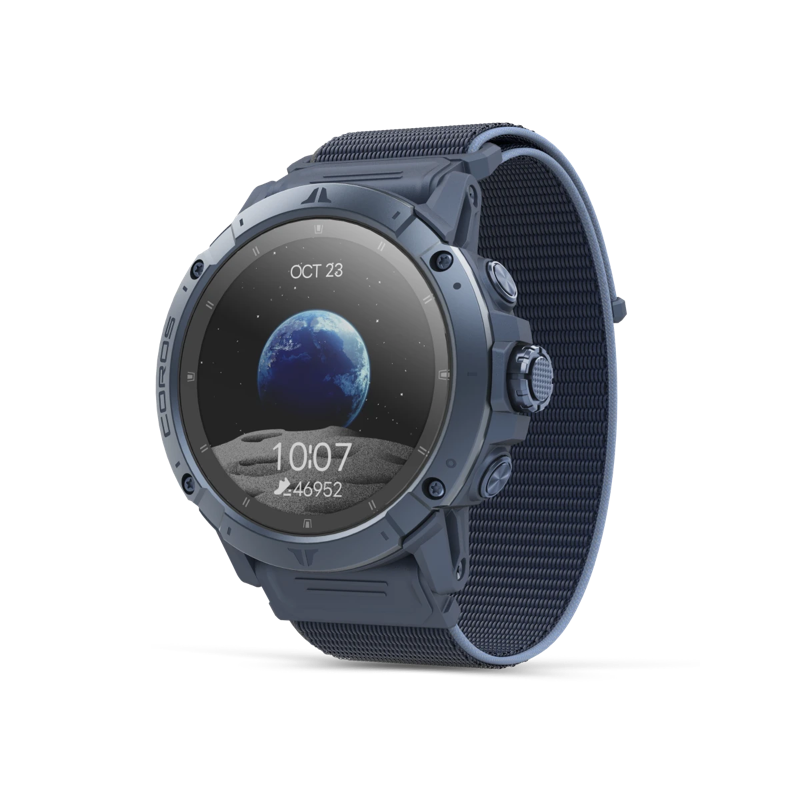
Coros Vertix 2S — battery specialist for long ultras
Coming soon: Garmin Enduro 4. Garmin's battery-focused ultra watch has cleared regulators and is expected before the end of 2026. Price and battery are unconfirmed. We'll add it here once it launches.
Why not the new Amazfit T-Rex Dual Solar ($649.99)? It has a clever design, but DC Rainmaker gained only 2 to 3% battery from a full day in the sun, and the rear panel overheated in warm weather. For now, the T-Rex 3 Pro is the better Amazfit.
Don't overspend on / worth paying for
Don't overspend on: LTE and satellite features if you race on marked, supported courses. Aid stations and race tracking already cover you.
Worth paying for: battery headroom. Aim for at least 1.5 times your expected finish time in your chosen GPS mode.
How your watch works with Elite You
Every watch in this guide works with Elite You, whatever the brand.
- Garmin: connect your Garmin Connect account directly from Elite You. Your runs sync automatically, including historical activities.
- Coros, Suunto and Amazfit: connect your watch app to Strava, then connect Strava to Elite You. Your runs flow through automatically, including GPS, heart rate and elevation.
Once your runs are syncing, Elite You matches completed runs to your plan, and AI run analysis looks at your last 8 weeks of running to shape what comes next. Accurate vert from a barometric altimeter makes that analysis sharper on trail.
No watch yet?
You can still start a plan and log runs manually.
FAQ
- Is dual-band GPS worth paying for? For road running in open areas, not really. Modern single-band watches like the Forerunner 70 and 170 are accurate there. It's worth having for trails under tree cover, in deep valleys or in built-up cities.
- AMOLED or memory-in-pixel (MIP) screen? AMOLED is brighter and sharper. MIP uses less power and is easy to read in direct sun. Most brands are moving to AMOLED, and with modern batteries the gap has narrowed. The Coros Apex 4 is one of the few MIP watches still worth buying.
- Wrist heart rate or chest strap? Wrist sensors are good for easy and steady running. For intervals, hill repeats and heart-rate-led training, a chest strap is more reliable. Every watch here pairs with one.
- Garmin, Coros or Suunto? All three make excellent watches and all three work with Elite You. Garmin has the deepest training features and app ecosystem. Coros leads on battery life for the price. Suunto stands out for heart rate accuracy on the Run 2 and includes free maps. Choose based on your runner type above, not the logo.
Ready to put it to work?
A great watch records your running. A good plan is what makes you better. Connect your watch, tell Elite You your goal, whether that's a first 5K or a mountain 100, and get a plan built around your terrain, your vert and your schedule.
Next step
Create an Elite You account or open the planner and build a plan around the race actually in front of you.
Prices are US recommended retail as of 28 September 2026 and will vary by region and retailer. Elite You doesn't earn anything from the links in this guide. This guide will be updated as new watches launch.
References
Independent reviews: iRunFar, Best GPS Running Watches 2026 · iRunFar, Forerunner 970 · iRunFar, Vertix 2S · DC Rainmaker, Forerunner 70 · DC Rainmaker, Forerunner 965 · DC Rainmaker, Suunto Run · DC Rainmaker, Suunto Vertical 2 · DC Rainmaker, T-Rex Dual Solar · the5krunner, Forerunner 170 · the5krunner, Suunto Run 2 · the5krunner, Coros Pace 4 Pro · the5krunner, Fenix 9 · the5krunner, Vertix 4 filing · The Run Testers, Forerunner 170 · Tom's Guide, Coros Pace 4 · Tom's Guide, Pace 4 maps · Tom's Guide, Suunto Run 2 · Tom's Guide, Forerunner 570 · Watches Reviewed, Pace 4 Pro · BetterTrail, Coros Apex 4 · RunToTheFinish, T-Rex 3 Pro · TechRadar, Enduro 4
Brand pages: Garmin Forerunner 70 · Garmin Forerunner 170 · Garmin Forerunner 265 · Garmin Forerunner 965 · Garmin Forerunner 970 · Garmin Fenix 9 · Garmin Fenix 9 Pro · Coros Pace 4 · Coros Pace 4 Pro · Coros Apex 4 · Coros Vertix 2S · Suunto Run · Suunto Run 2 · Suunto Vertical 2 · Amazfit T-Rex 3 Pro