
The hour that keeps me climbing
This session is part of my build for DNT and MUT George in 2027. At the Karkloof 30 miler my adductors cramped first, so that work in this session gets extra attention.
I do this because running builds the engine. It doesn't build the chassis. This hour is so my quads, hamstrings, calves and hips can take the climbs and the long descents.
It sits on the first of two easy days. In a normal week that is Wednesday, with Thursday easy behind it. I keep the session off the day before a hard run. A tempo is already taxing. Running one the day after this session just opens the door to injury.
I do it once a week. That's enough to build the strength. The rest of the durability comes from the running itself. Twice a week would start to compromise that.
The session covers quads, hamstrings, calves, adductors and hips.
Why Runners Need Strength Training
- Durability: stronger muscles and tendons handle the repeated load of thousands of steps.
- Economy: a stiffer, stronger leg wastes less energy with every stride.
- Downhill resilience: eccentric strength is what protects your quads and knees on long descents.
- Injury resistance: the calf, hip and groin work below targets the spots that break down most often.
The Session at a Glance
| Exercise | Sets x Reps |
|---|---|
| Squat | 4 x 5 heavy |
| Single-leg RDL or RDL | 3 x 8 |
| Bulgarian split squat or eccentric step-downs | 3 x 8 per leg |
| Single-leg calf raise (straight, then bent knee) | 3 x 10 each |
| Copenhagen plank | 3 x 20 to 30 seconds per side |
| Hip abduction (machine or side plank) | 2 to 3 x 12 |
Warm up with 5 to 10 minutes of easy cycling or walking, plus a couple of light sets of squats. Rest 2 to 3 minutes between heavy squat sets and about 60 to 90 seconds between everything else.
1. Squat: 4 x 5 Heavy
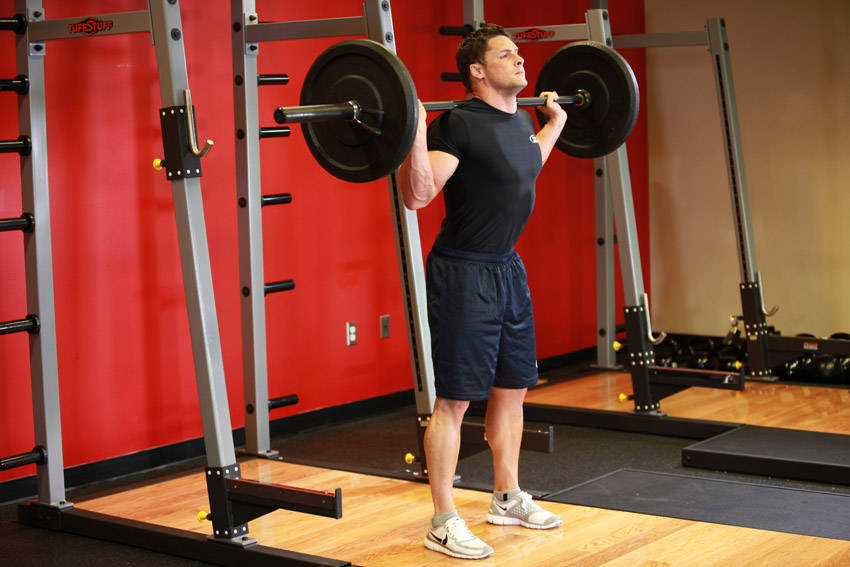
Barbell squat: the anchor lift of the session
This is the anchor lift. Five reps at a weight that leaves 1 or 2 reps in the tank on every set. Heavy means heavy for you, not a max attempt.
- Brace your core, keep your chest tall and drive up through the whole foot.
- Squat to at least parallel if your mobility allows it.
- Stop a set when your bar speed drops or your form slips.
2. Single-Leg RDL or RDL: 3 x 8
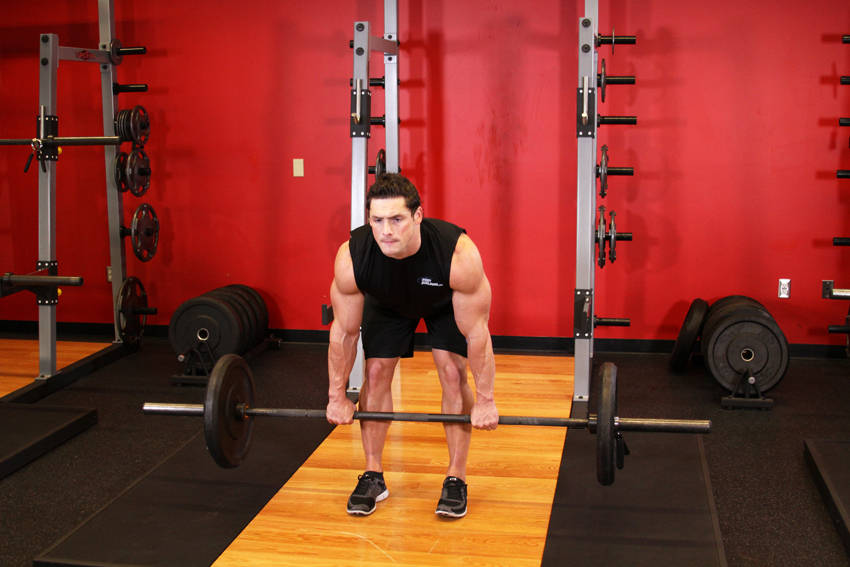
Romanian deadlift for hamstrings and glutes
Your hamstrings and glutes power every uphill step. The RDL loads them through a long range, and the single-leg version adds balance and hip stability on top.
- Hinge at the hips, soft knees, spine long. Think "push your hips back", not "bend over".
- Lower until you feel a strong stretch in the hamstrings, then drive the hips forward.
- New to single-leg work? Start with the two-leg RDL and progress when it feels easy.
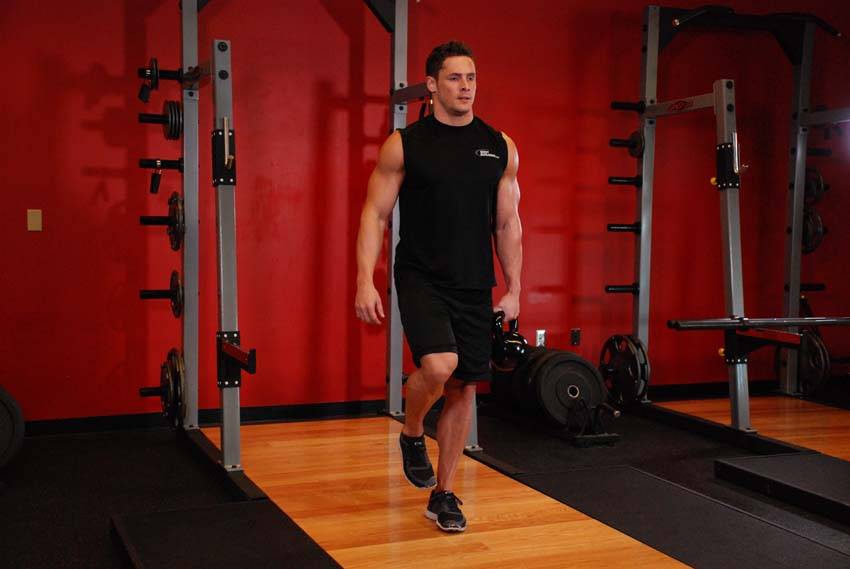
Single-leg deadlift variation for balance and hip stability
3. Bulgarian Split Squat or Eccentric Step-Downs: 3 x 8 per leg
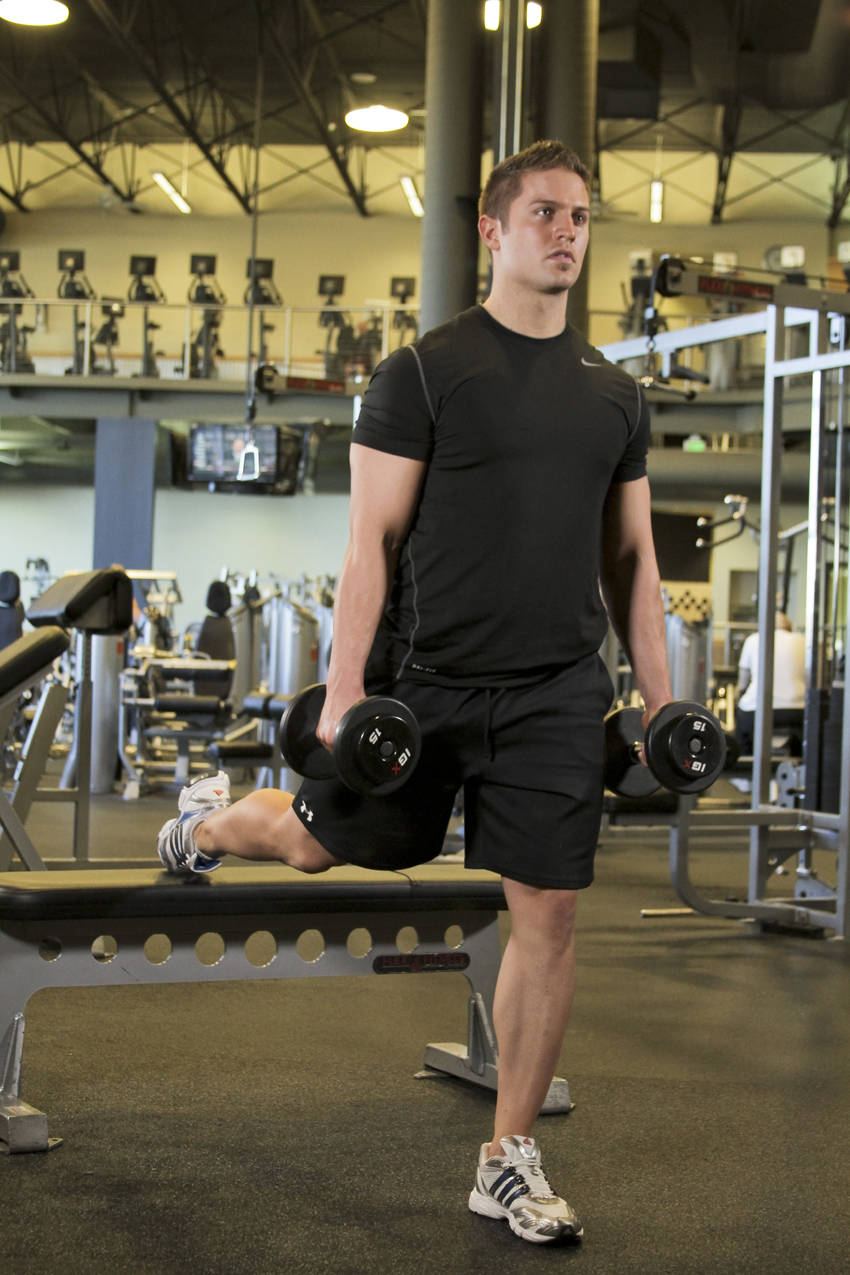
Split squat: single-leg strength for a single-leg sport
Running is a single-leg sport, so train it that way. Pick one option:
- Bulgarian split squat: rear foot on a bench, front foot far enough forward that your shin stays close to vertical.
- Eccentric step-down: stand on a box, take 3 to 4 seconds to lower the opposite heel toward the floor, tap lightly, and stand back up. This is the one for anyone racing steep descents.
Do all reps on one side, then switch.
4. Single-Leg Calf Raise: 3 x 10 each
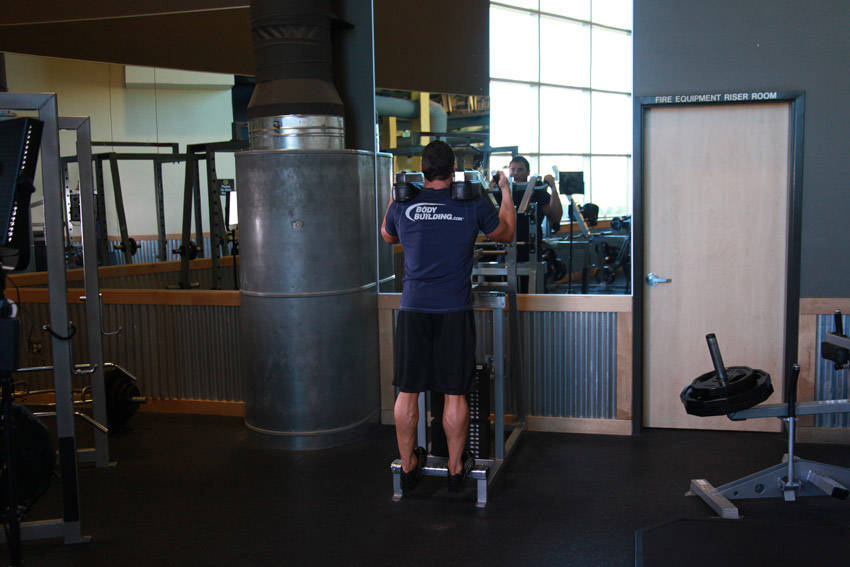
Standing calf raise: straight and bent knee
Do 10 reps with a straight knee (targets the gastrocnemius), then 10 with a slightly bent knee (targets the soleus). The soleus does most of the work when you run, so don't skip the bent knee version.
- Rise slowly, pause at the top, lower for 2 to 3 seconds.
- Use a step for full range, and hold a rail for balance.
5. Copenhagen Plank: 3 x 20 to 30 seconds per side
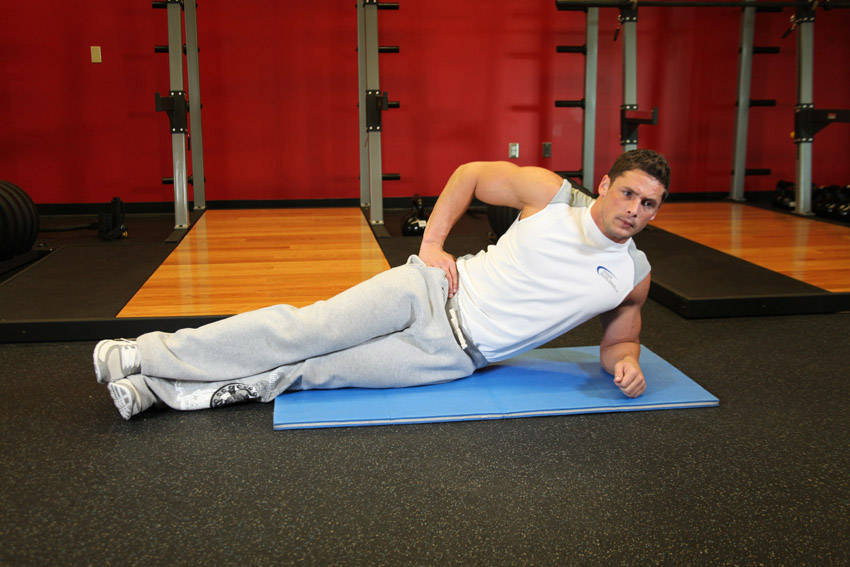
Side bridge: the base position for the Copenhagen plank
The Copenhagen plank strengthens your adductors, the inner thigh muscles that stabilise your pelvis with every stride. Set up like a side plank, but with your top leg supported on a bench, and lift your hips so the body forms a straight line.
- Start with a bent-knee version, resting the knee on the bench, if the full version is too hard.
- Keep your hips stacked and don't let them sag.
- Build up to 30 seconds before adding difficulty.
6. Hip Abduction: 2 to 3 x 12
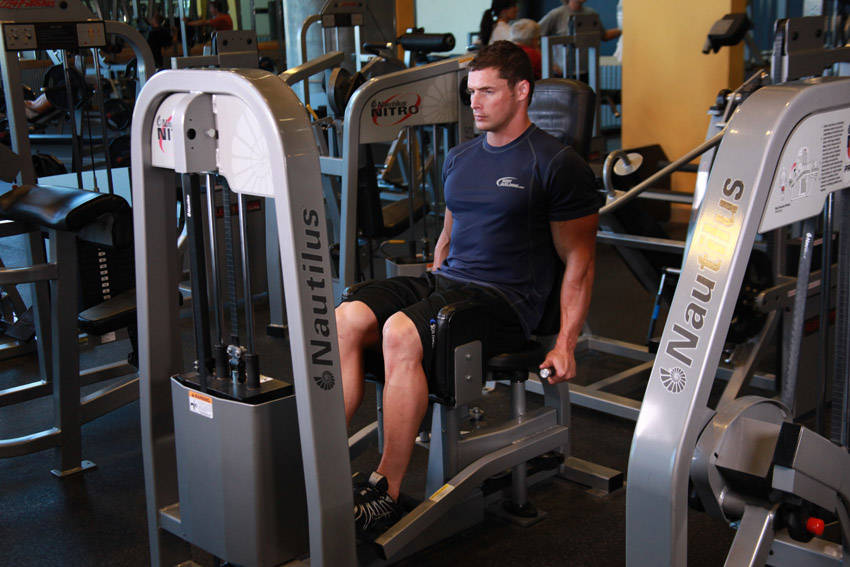
Hip abduction: keep knees tracking and pelvis level
Strong glute medius muscles keep your knees tracking properly and your pelvis level. Use the abduction machine, or do side planks (hold for 20 to 30 seconds) if you don't have one. Move with control and don't swing.
Pro Tip
Do this session once a week, on the first of two easy days, and leave the next day easy. A hard run the day after just opens the door to injury. In the last 2 weeks before a goal race, drop to 2 sets per exercise and stay well clear of soreness.
How to Fit It Into Your Plan
- Frequency: once a week is enough to build strength. The rest of the durability comes from the running. A second session in the same week starts to compromise that.
- Progression: when you hit every rep with good form, add a small amount of weight the next week.
- Soreness: expect a little in the first 2 to 3 weeks. If it hangs around beyond 48 hours, reduce the load.
- Pain: sharp or joint pain means stop. Get it checked by a physio or your doctor.
Final Word
Strength work won't replace your miles, but it makes every mile more robust. Get the basics right, add load gradually and stay consistent.
Unleash the runner within.
Train smart. Run hard. Progress always.
Always check with a doctor or physio before starting a new strength program, especially if you have an existing injury.